Why Customs Compliance Matters
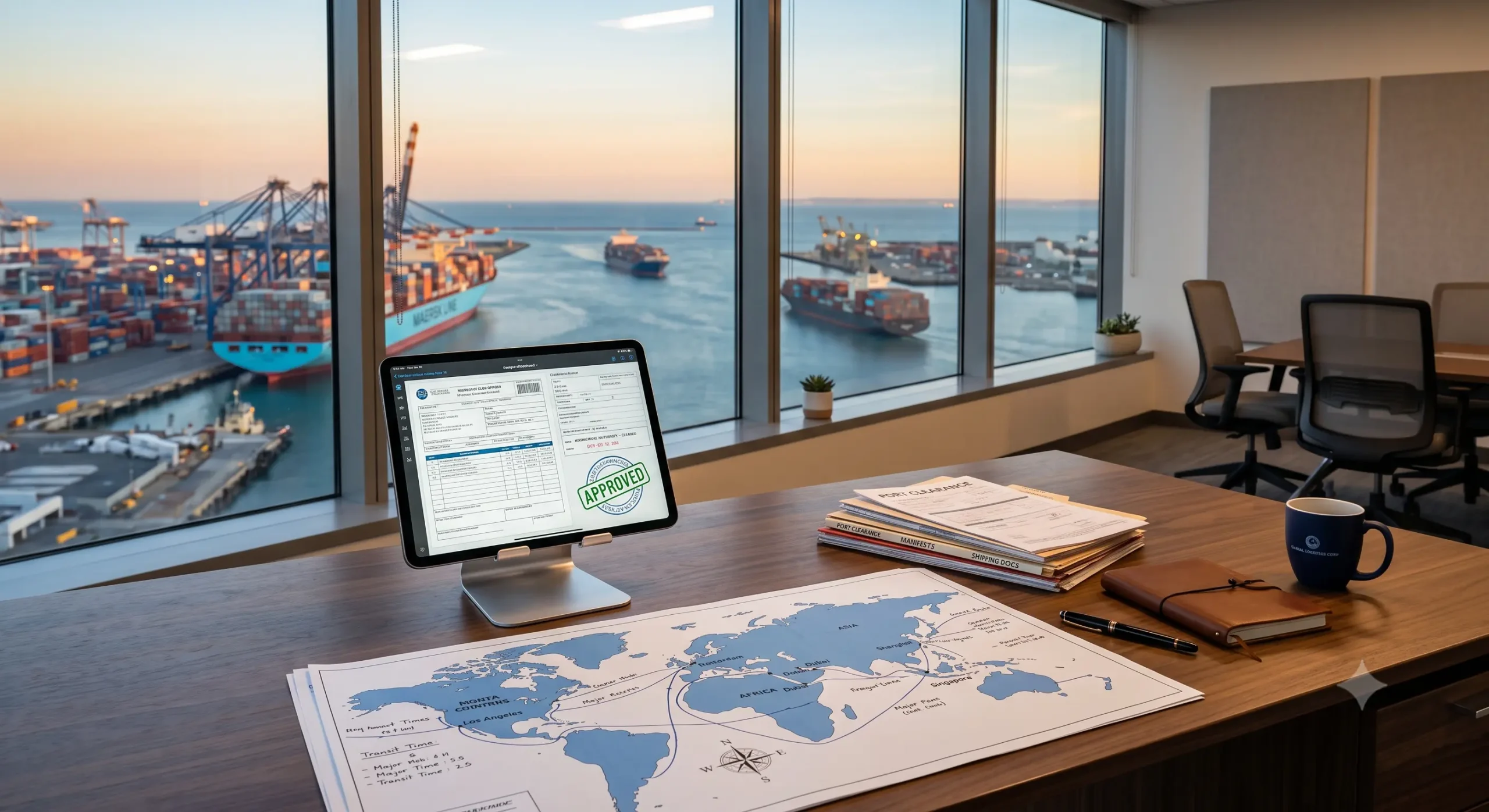
Border delays and regulatory holds happen when documentation contains discrepancies, improper Harmonized System (HS) classifications, or missing certifications. Having verified documentation ready before cargo arrives at port ensures uninterrupted movement.
1. Commercial Invoice
The primary financial record of the sale, detailing buyer and seller information, exact itemized commodity descriptions, quantities, unit prices, total value, currency, and agreed Incoterms.
2. Packing List
Accompanies the commercial invoice, detailing the physical specifications of each package: net and gross weights, package dimensions, carton markings, and packaging types.
3. Bill of Lading (B/L) or Air Waybill (AWB)
The legal contract of carriage between the shipper and carrier. The Bill of Lading applies to ocean freight, while the Air Waybill governs air cargo, establishing ownership and destination handling.
4. Certificate of Origin (COO)
An authenticated document declaring where products were manufactured, essential for determining preferential tariff rates under trade agreements.
5. Import/Export Declarations & Specialized Permits
Specific products (such as chemicals, pharmaceuticals, and electronics) require mandatory test reports, material safety data sheets (MSDS), or statutory agency clearances.
Universal Freight’s in-house brokerage team manages end-to-end documentation coordination to prevent customs bottlenecks.